
Haines City Irrigation Solutions: Sprinkler System Installation & Repair Contractor in Haines City, Florida
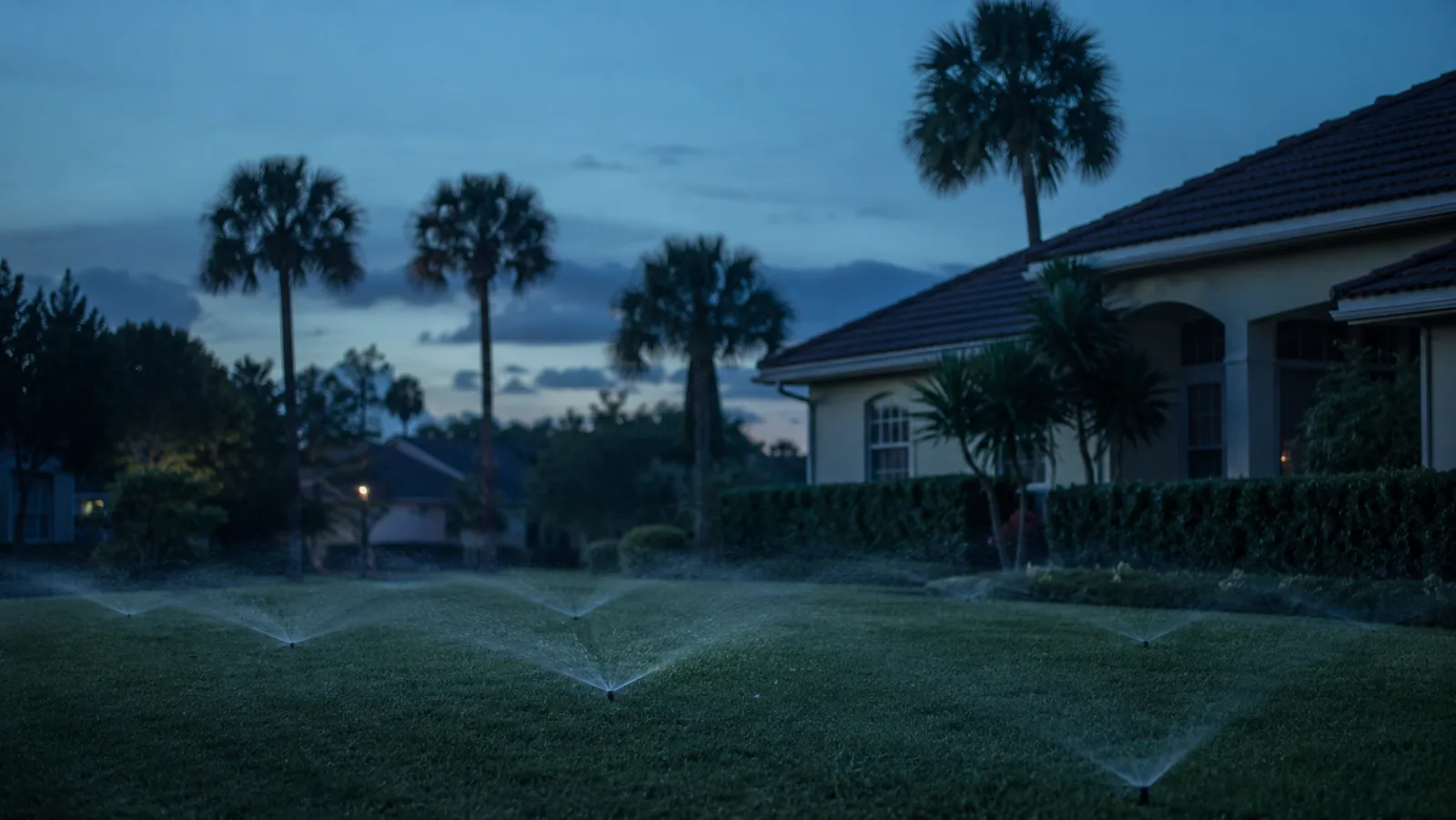
Haines City Irrigation Solutions is a lawn sprinkler system contractor that installs in-ground sprinkler systems and provides irrigation system design and new construction irrigation in Haines City, Florida. Whether you are planning a new system or dealing with one that has stopped working, we bring 15 years of experience to the job. When a residential irrigation system fails, we provide irrigation system repair. We also address related problems with irrigation pumps and backflow preventers that can affect water flow, pressure, or system operation. For ongoing care, we provide irrigation system maintenance, inspection and audits, along with smart and WiFi irrigation controllers.
Some properties need a more specialized irrigation setup because they use lake or reclaimed water, have planting beds with different watering needs than an open lawn, or require irrigation for commercially managed grounds. Our specialized services include reclaimed water irrigation, lake-fed irrigation systems, drip and micro-irrigation, and commercial irrigation. We are licensed and insured.
For an underground irrigation system installation, we measure your water supply and match the spray heads and rotors so every zone waters evenly. Before handover, we test the coverage. Depending on the system, we install Rain Bird, Hunter, Toro and Irritrol components, including control valves and weather-based controllers.
Across Davenport, Winter Haven, Poinciana, ChampionsGate and Reunion, fast-draining Lake Wales Ridge sand can make uneven watering show up quickly. Haines City Irrigation Solutions provides lawn sprinkler installation across these communities throughout Polk and Osceola counties. Call or use our online form today to set up a consult and estimate.
Get A Free Quote
Why Choose Haines City Irrigation Solutions for Lawn Sprinkler System Installation & Repair
- Haines City Irrigation Solutions is a licensed and insured irrigation contractor serving Polk County and neighboring Osceola communities.
- Free written estimates. Know the scope before trenching begins.
- Zones designed for your property. We lay out each zone for the actual property rather than using a template.
- Measured coverage. A catch-can distribution uniformity test verifies how evenly the system waters before handover.
- Accessible components. Swing joints, waterproof wire splices and valves in reachable boxes make future service easier. We also have underground utilities marked before trenching.
- Clear handover. You receive an as-built zone map, and your controller is programmed to the current watering requirements for your address.
- Built for your water source. We configure the system to suit municipal, reclaimed, lake or well water.
Call (863) 900-8243 or use our quote form to request an on-site evaluation for your property.
In Addition To General Sprinkler / Irrigation System Installation, We Also Provide These Services Across Polk County
-
Irrigation System Repair
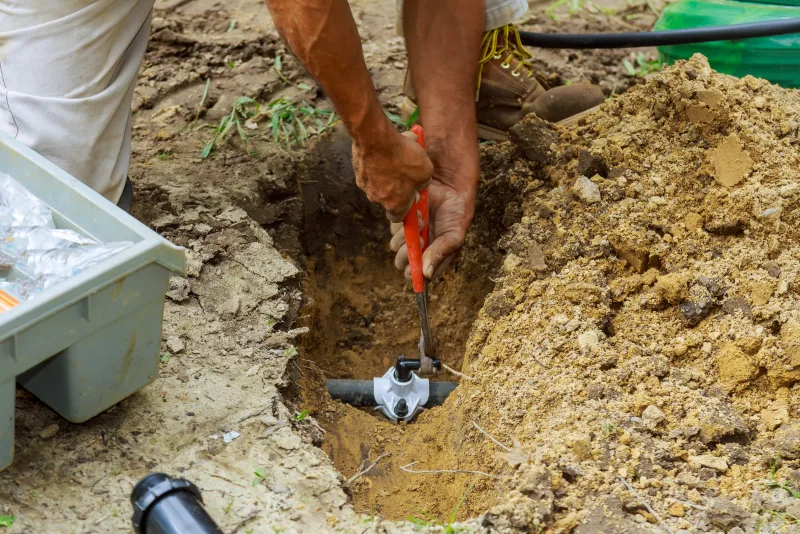
Dry crescents, soggy patches, a zone that will not open or an increase in your water bill can all point to a fault somewhere in your irrigation system. Finding the source of the problem is the first step in irrigation system repair. We use a valve locator and wire tracer to locate failed solenoids, the electrical parts that open the valves, or damaged wiring without excavating the lawn. Once we pinpoint the fault, we can open a small area around it instead of trenching across the yard to search for the problem. After completing the sprinkler repair, we pressure-check the affected zone to make sure it is operating properly before leaving.
-
Irrigation System Maintenance
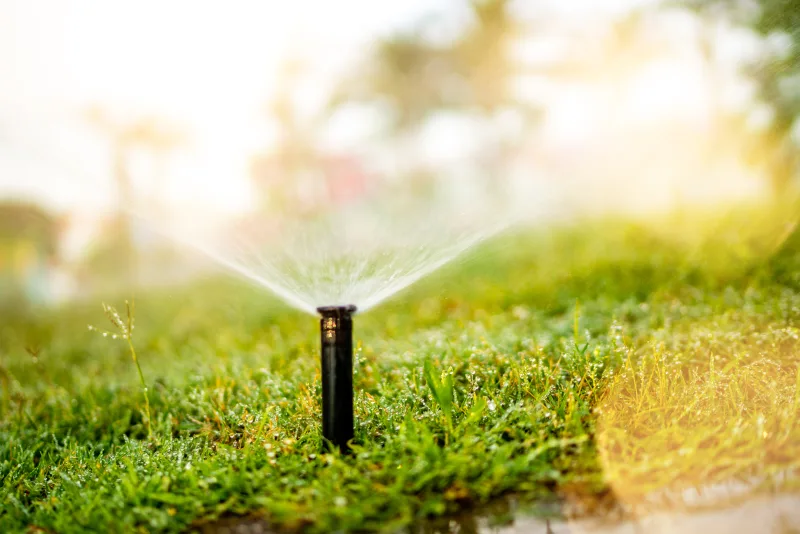
Coverage problems can damage your lawn before the signs become obvious, so an irrigation maintenance program helps catch them early. During each visit, we run every zone and correct problems that have changed the watering pattern, including tilted heads, incorrect spray arcs and nozzles blocked by debris. Because Florida sun degrades a rain-shutoff sensor, we test the weather-exposed sensor during each visit. On reclaimed, lake-fed and well systems, filter servicing removes solids that can close small nozzles. Freeze preparation protects above-grade backflow assemblies and pump housings.
-
Commercial Irrigation
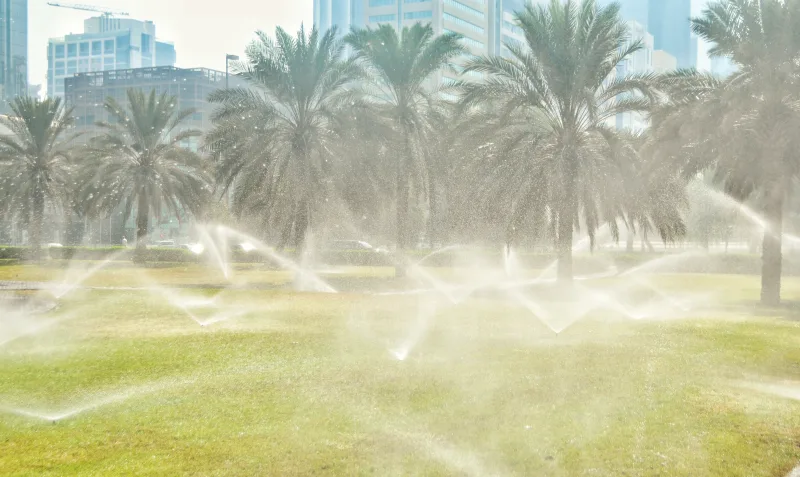
When you manage an HOA, apartment property or commercial frontage near the Interstate 4 corridor, irrigation problems can affect multiple buildings, public areas and the people using the property. Commercial irrigation must support larger valve counts while remaining manageable for those responsible for maintenance. We organize multi-station controllers with clear valve labels and zone mapping. A master valve can stop the main supply while irrigation is idle, while a flow sensor identifies abnormal use from a broken line. Property managers receive documented zone maps, and we arrange service windows around tenant access and public areas.
-
Backflow Preventers
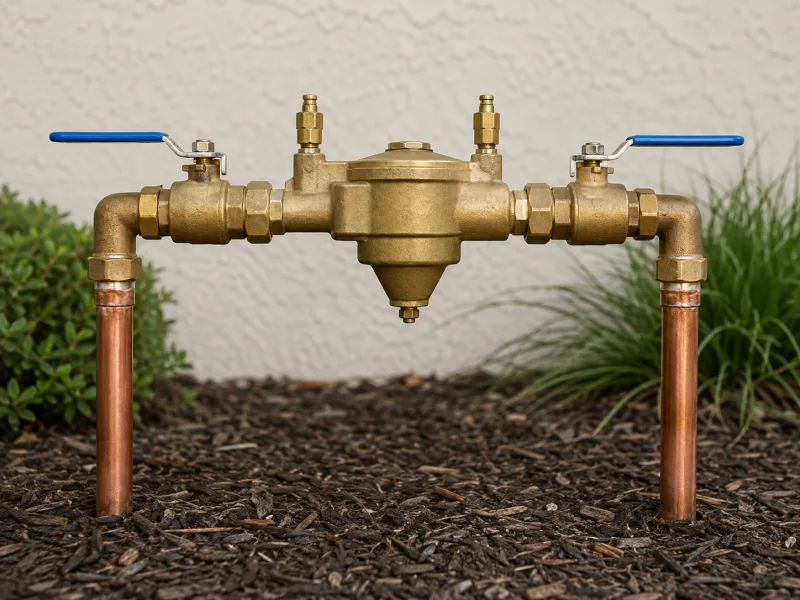
Water sitting in irrigation pipes around soil and fertilizer must not be drawn back into your drinking water. A backflow preventer keeps that irrigation water from being drawn back into the potable water supply. We install and service the assembly according to the water utility's requirement, using an assembly rebuild kit when worn seats or springs no longer seal. The utility specifies the assembly your address requires — typically a pressure vacuum breaker or a reduced pressure zone assembly. Annual testing and certification require a certified backflow tester recognized by the water utility; we do not test, certify or file those results.
-
Drip & Micro-Irrigation
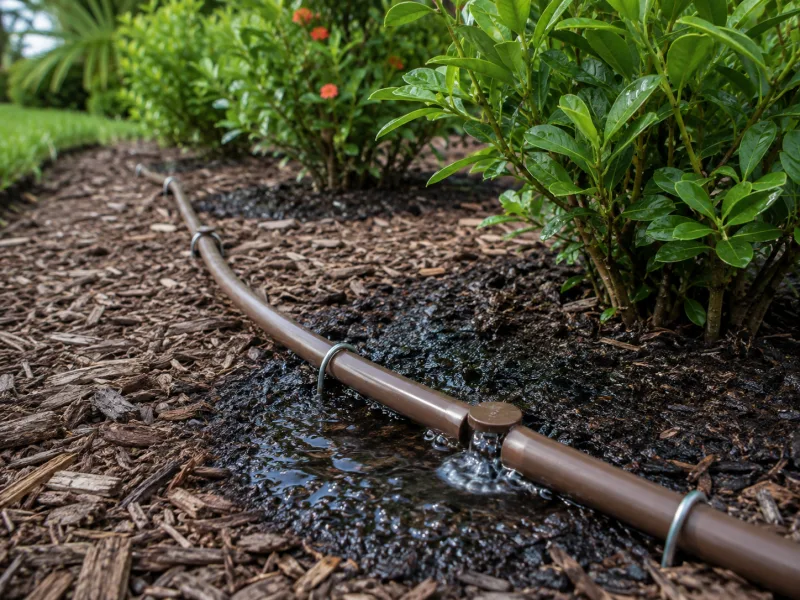
If your planting beds need water at the roots instead of across the leaves, drip irrigation and micro-irrigation provide low-volume coverage without sharing a turf zone. We lay inline drip tubing and select each emitter or micro-spray according to the plant type and spacing. Pressure-compensating emitters deliver the same amount at the start and end of a run. Where water enters the zone, a filter keeps debris out, while a pressure regulator reduces the flow to the tubing's operating range. On fast-draining ridge sand, the root area and plant spacing determine whether an emitter or micro-spray is more suitable.
-
Smart & WiFi Irrigation Controllers
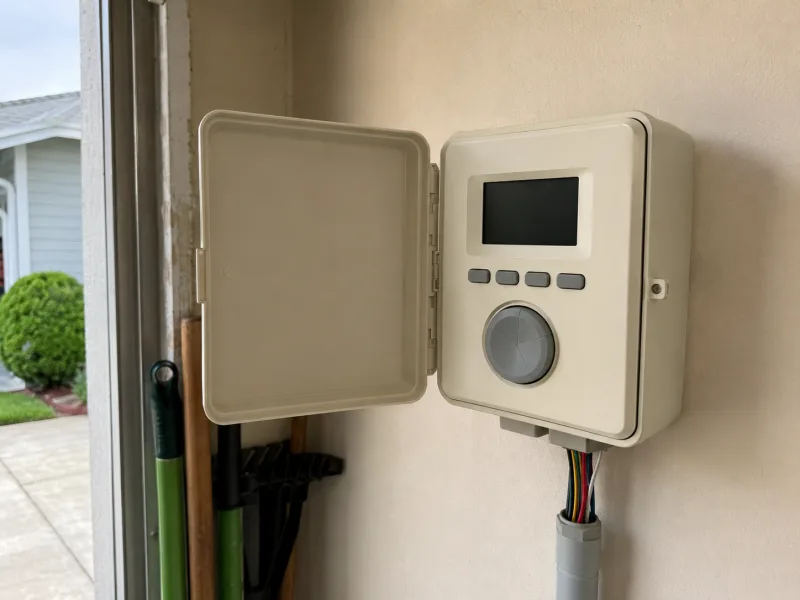
A system that still runs from a fixed clock cannot respond to current conditions on its own. A WaterSense-labeled weather-based controller paired with soil-moisture sensing can automate watering based on those conditions. We install smart irrigation controllers, along with WiFi irrigation controller options that provide app access and zone-level commands. EPA states that replacing a clock-based controller can save an average home up to 15,000 gallons a year. Remote control is especially useful for second-home and rental owners in ChampionsGate and Reunion when a tenant reports a problem. Before setup, we confirm signal strength and label each zone in the app.
-
Irrigation Pumps
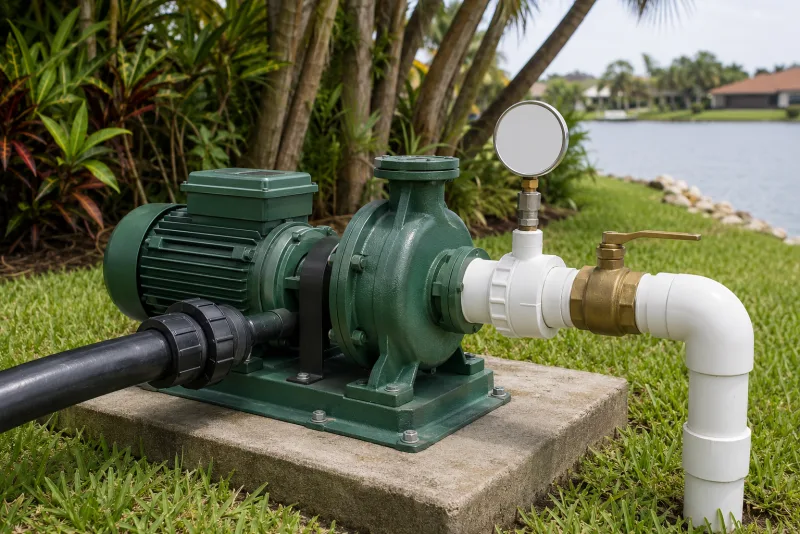
When several zones depend on one water source, an undersized pump can leave sprinkler heads without the flow and pressure they need. We size irrigation pumps and pump stations for the highest-flow zone rather than the largest area on a drawing. A centrifugal pump suits many surface-water applications, while a submersible pump works within the source. We install Sta-Rite and Berkeley equipment with dry-run protection, which shuts the pump off if the water source runs dry. We also install pressure tanks that limit short-cycling, the rapid on-and-off switching that wears a pump out. When replacing a failed pump, we match its flow in gallons per minute (gpm) and pressure to the zone demand so your heads continue operating within their intended range.
-
New Construction Irrigation
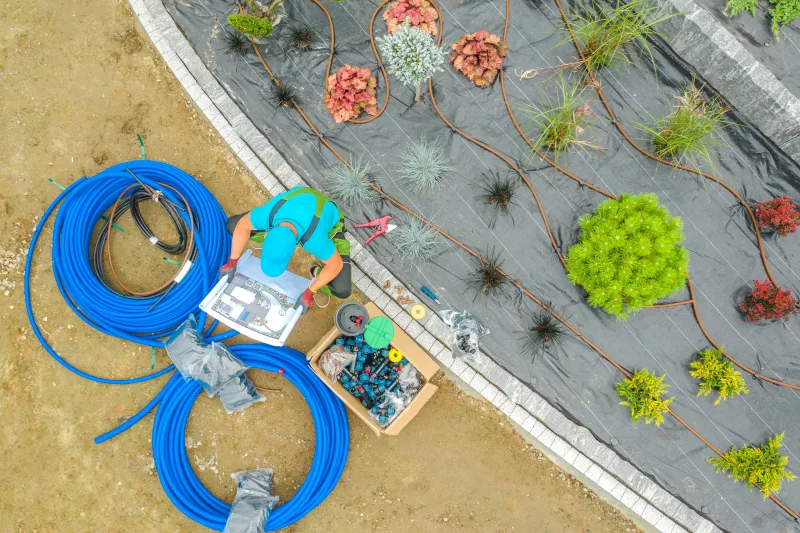
Before paving is poured, builders can place new construction irrigation sleeves beneath every planned driveway and walkway crossing, and we coordinate those sleeves with the mainline pipe so the irrigation route does not have to be installed twice. Rather than designing around an empty lot, we follow the final planting plan and keep valve locations clear of proposed structures. For new development projects across eastern Polk County, builders receive handover documents that can pass to the buyer after closing.
-
Reclaimed Water Irrigation
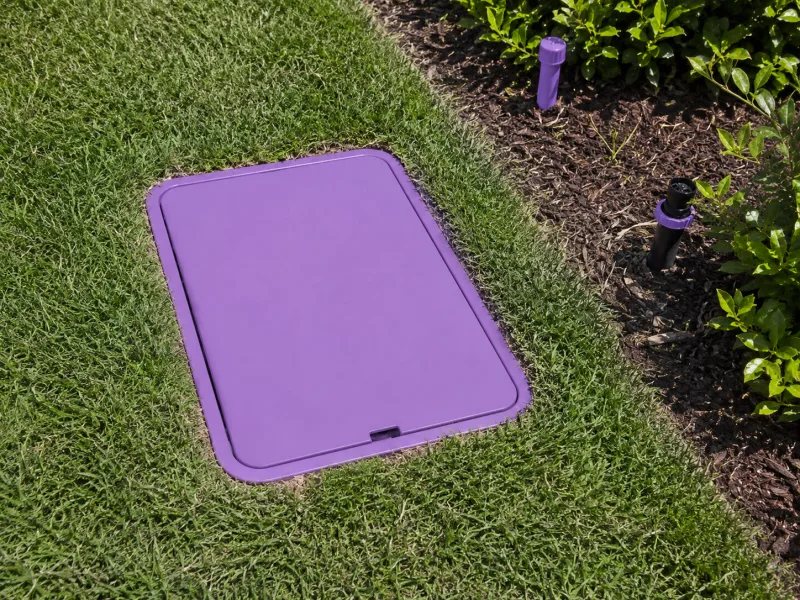
If your irrigation system runs on reclaimed water, the pipe, valves and filtration must be identifiable and compatible with a supply that carries solids and has different chemistry. Reclaimed water irrigation uses purple pipe and fittings, with physical separation from potable lines at valve boxes and connections. A disc filter or screen filter catches material before it can reach the nozzles. The connection follows the utility requirement for your address, including the approved point of connection and required system identification. We also use seals and valve parts rated for reclaimed service.
-
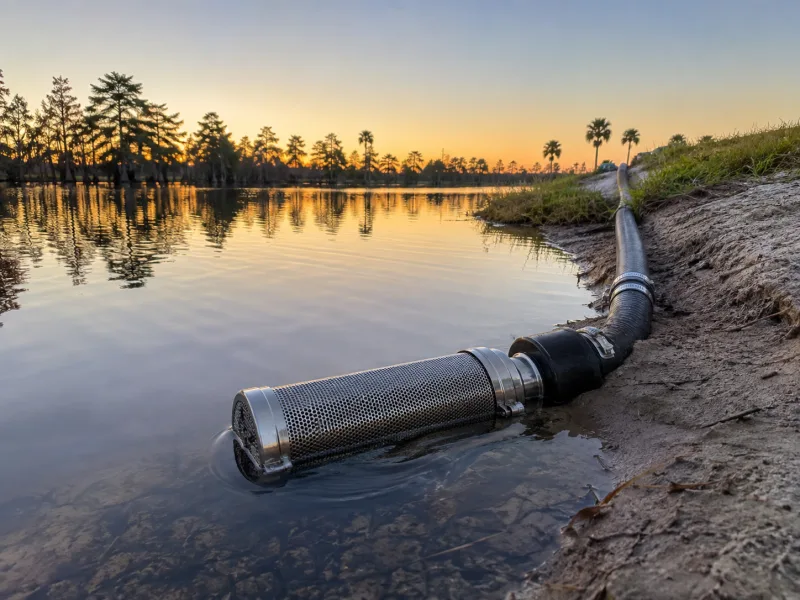
Lake-Fed Irrigation Systems
Drawing irrigation water from a lake means every component exposed to that untreated water must be considered as part of the complete surface-water irrigation system, including the intake, screening and pump. We position a screened intake above bottom silt and account for seasonal changes by setting it to remain usable at the low-water mark. A self-priming pump draws water through sacrificial screens that catch algae and organic matter before they reach the valves. Those screens are designed to be replaced. On lake-fed properties in Lake Hamilton, the equipment must tolerate years of source-water exposure while remaining accessible when the screens need cleaning.
-
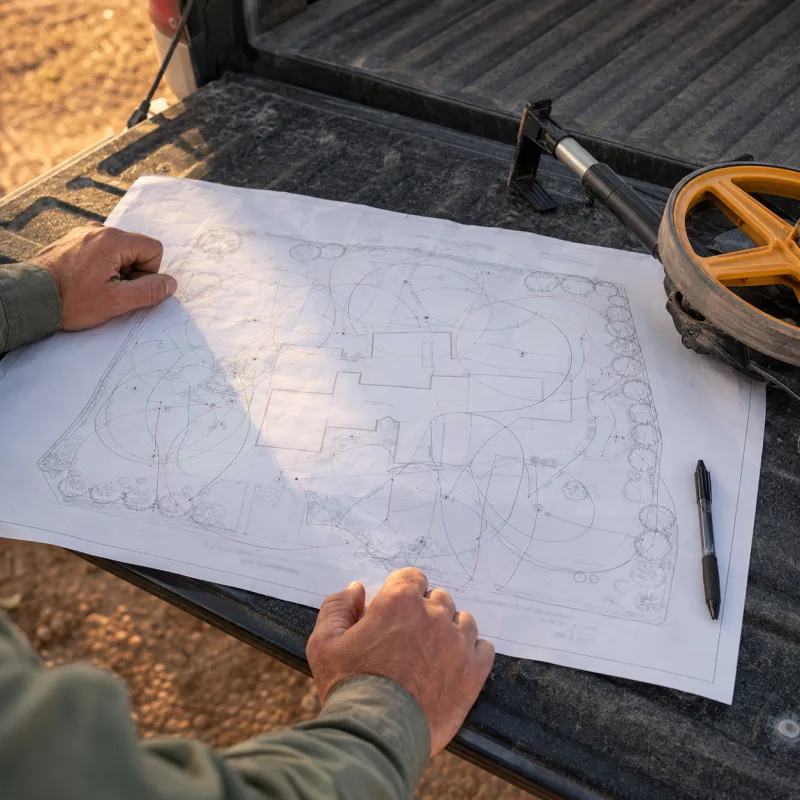
Irrigation System Design
Builders, architects and owners sometimes need plans before choosing an installer. Our irrigation system design service provides a complete drawing package with zone planning. The set identifies the zone layout and pipe sizing schedule, while a hydraulic calculation confirms that the design works with the available flow in gpm. Where the scope requires permitting documentation, we prepare it and, once approved, issue the plan for construction. Once installation is complete, we revise the as-built drawing to record field changes, giving you an accurate record of what is underground.
-
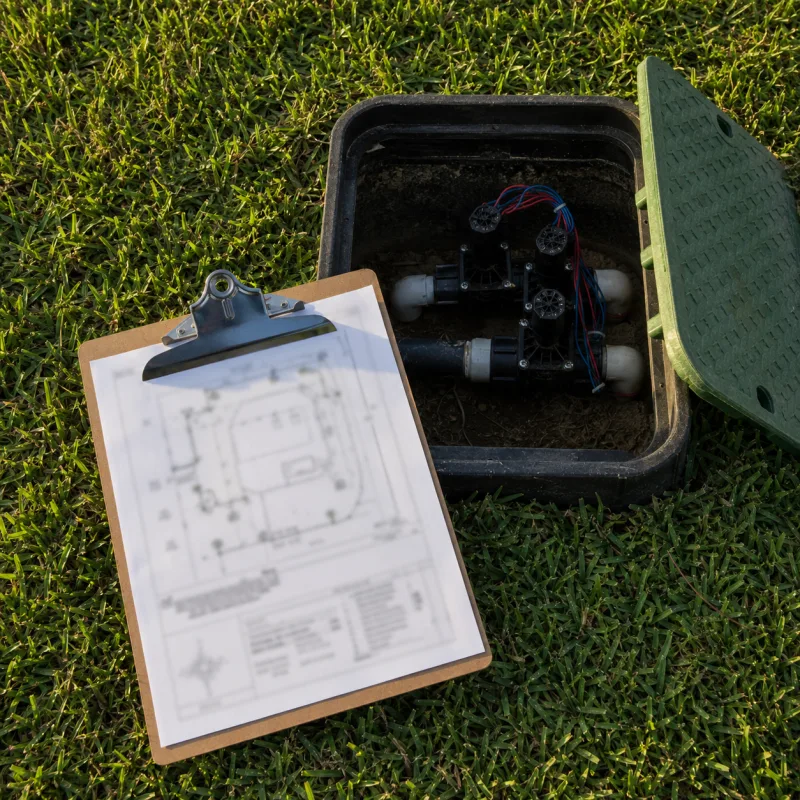
Irrigation Inspection & Audits
A property sale, builder handover or sudden increase in the water bill may call for documented measurements rather than routine adjustments. An irrigation inspection gives you that evidence. We place catch cans throughout each zone and report distribution uniformity as a percentage so poor performance can be documented. A head pressure gauge measures operating pressure where the nozzle works rather than at a tap. Your written irrigation audit then ranks leaking valves and poor coverage according to their water impact, giving you a clear order for making corrections.
Residential In-Ground Sprinkler Systems
A home's water supply can feed only part of the yard at a time, so the yard is watered in zones — and because lawns and planting beds need different amounts of water, they get zones of their own. Residential sprinkler system installation brings buried irrigation piping, heads, valves and a controller together as one in-ground sprinkler system. Because the water available to run those components varies by property, we size the residential irrigation system around what the supply can actually deliver. Two lawns of the same size can therefore require different zone layouts and components.
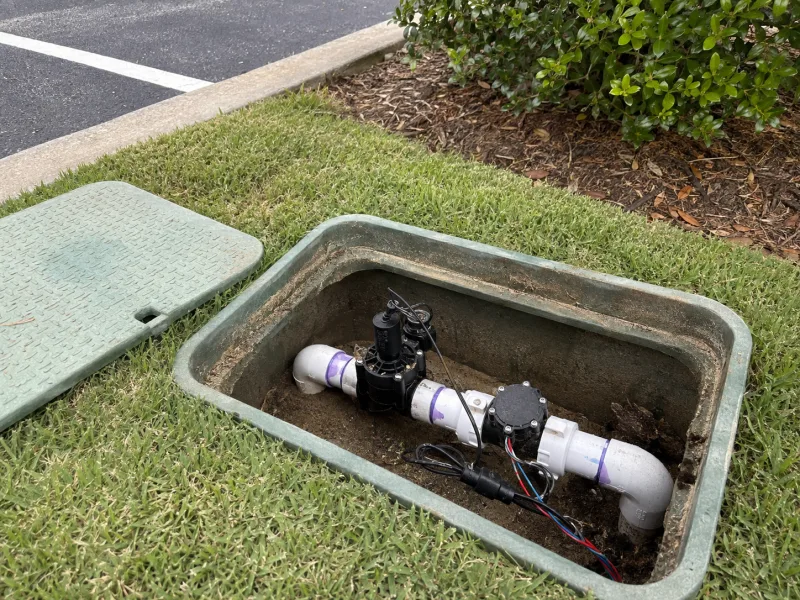
How the Zones, Valves and Piping Fit Together
Turf, planting beds, sunny grass, shaded areas and damp low corners do not have the same watering needs, so each part of your property must be grouped and watered separately. Irrigation professionals call this grouping hydrozoning, and it determines how the underground sprinkler system is divided into zones. Before planning those zones, we measure the water source because the available flow determines how many separate zones and valves the supply can support. A pressurized mainline carries water to the valve manifold, lateral lines supply each zone and the controller opens each valve separately. A lawn sprinkler system typically uses pop-up spray heads for smaller, irregular spaces and gear-driven rotors across open turf. A backflow prevention assembly sits between your supply and the system.
Coverage Planning for a Lawn and Its Planting Beds
Dry patches, driveway overspray and sprinkler heads damaged during yard work can all result from poor placement. During home sprinkler system installation, we use head-to-head spacing so the lighter edges of adjacent sprinkler patterns overlap instead of leaving gaps. Every underground sprinkler installation also keeps heads clear of gates and edging, reducing the chance of damage during yard work. Adjustable-arc nozzles direct water away from walls, windows and paving to prevent driveway overspray and wasted water. For most properties, an inground sprinkler system installation places drip tubing or micro-spray emitters on separate valves because shrubs and grass require different lawn and landscape watering patterns. On properties with ridge sand, uneven coverage from spray heads and rotors can scorch patches during a rainless week.
Sprinkler Heads, Pipes, Valves and Controllers
Two systems on similar-looking properties can deliver very different coverage, reliability and performance, because specifications and installation quality matter. To build a system around the needs of your property, our irrigation installation services include sprinkler head installation, irrigation pipe installation, irrigation valve installation and controller installation.
Heads, Nozzles and Why Precipitation Rate Decides the Zone
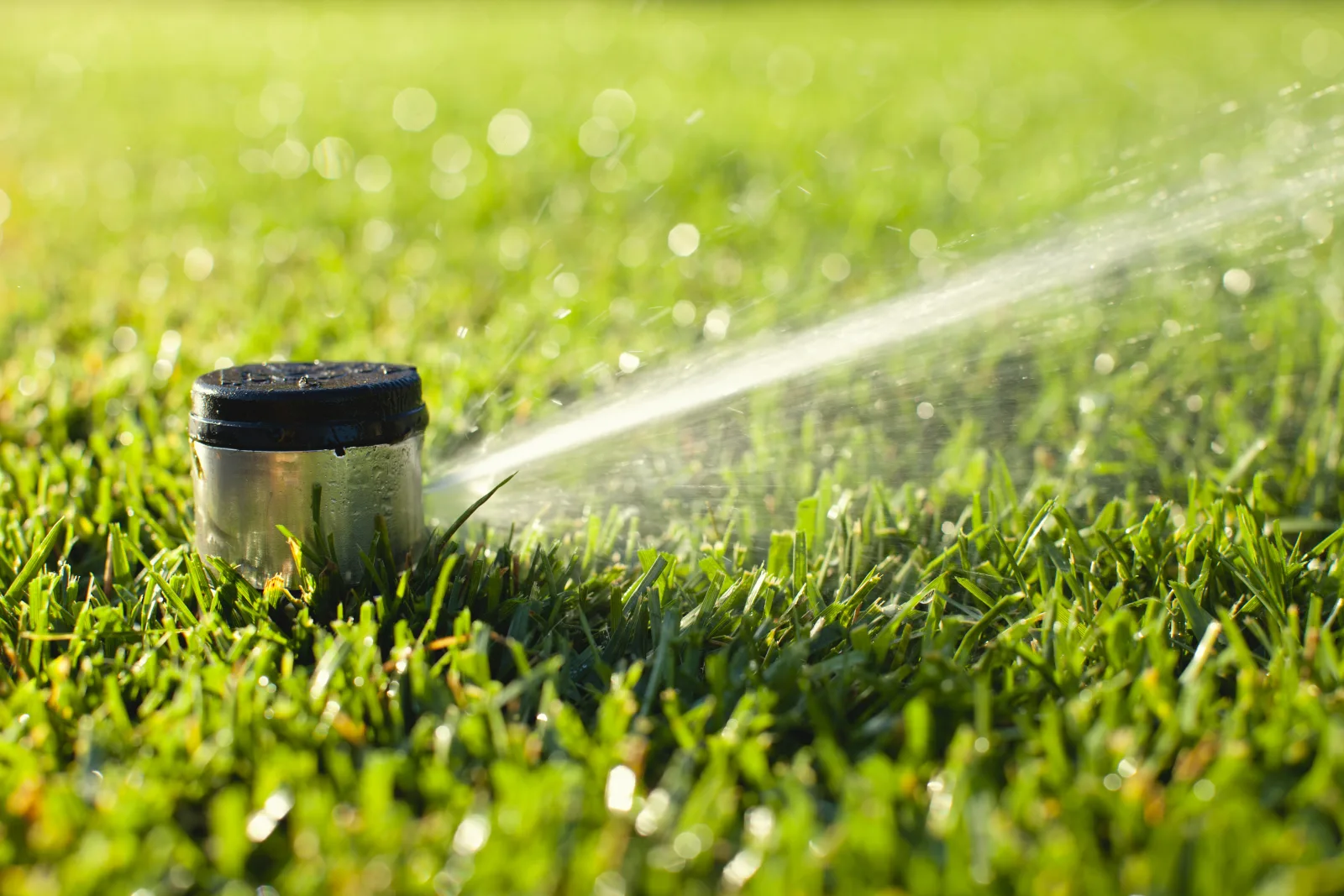
Every head can appear to be running normally while some areas quietly receive far more water than others. To keep the depth of water per hour consistent across each valve, we select spray heads and rotor systems with a matched precipitation rate. Because spray bodies and gear-driven rotors apply water at different rates, they cannot share a valve. Pressure-regulated spray bodies also hold the rated nozzle pressure, which reduces misting.
On a slope, water can continue draining through the lowest heads after a zone shuts off, leaving water where you do not want it. Check valves stop that drainage. We also match fixed or adjustable-arc nozzles to the shape of the area and keep Rain Bird, Hunter, Toro or Irritrol families consistent within each zone.
Pipe, Valves, Wiring and the Backflow Assembly
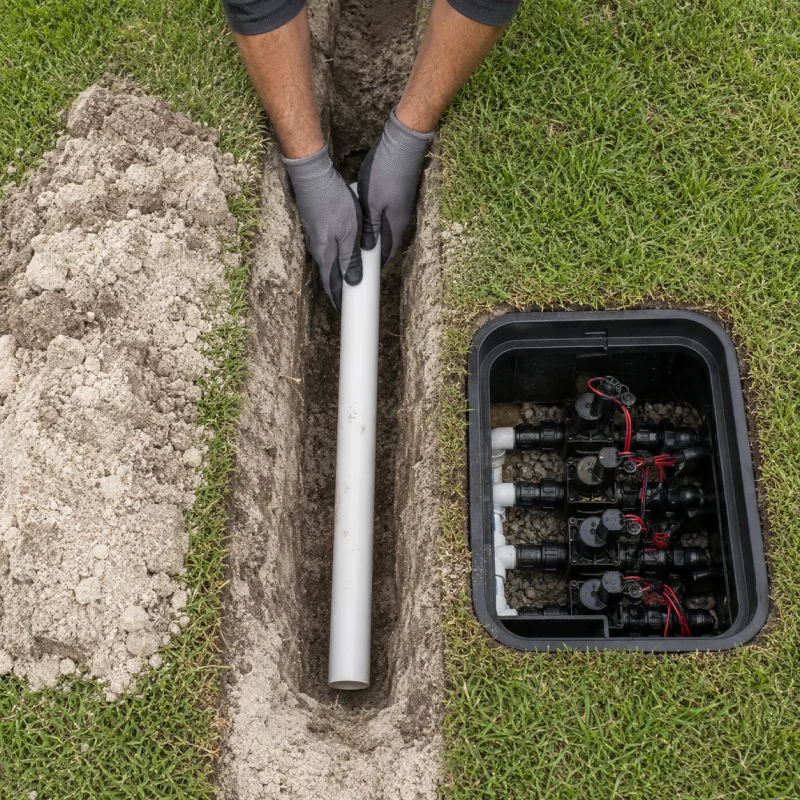
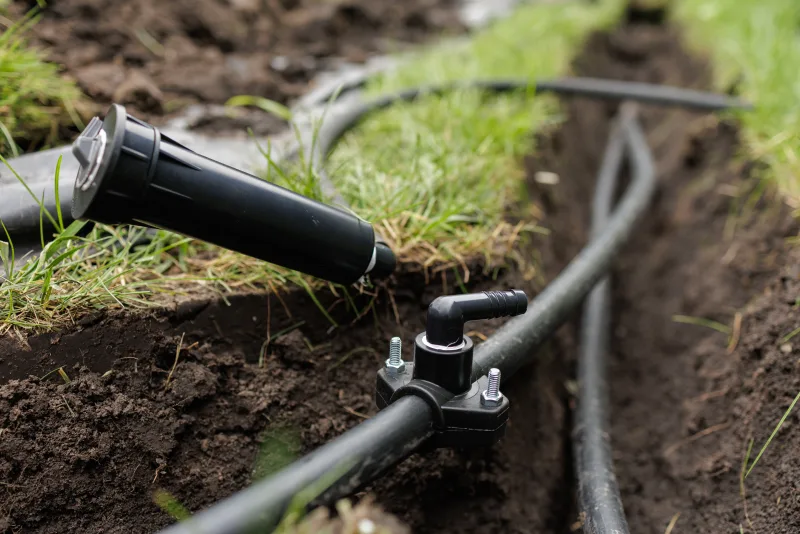
Your buried piping must carry the required flow without making every run larger than necessary. We size Schedule 40 PVC pipe and fittings according to the length and flow of each run instead of using one default diameter throughout the property. At each head, a swing joint creates a flexible, replaceable connection that protects the buried lateral line when a mower damages the head.
If a valve or wire later needs service, you should not have to excavate the lawn to find it. When installing irrigation valves, we place them in accessible valve boxes. We also label zone conductors, add tracer wire where appropriate and seal underground splices with waterproof wire connectors so the buried electrical connections remain protected.
Your controller needs enough stations for the current system while leaving room for later additions. We match the controller stations to the zone count and reserve spare stations for that purpose. Each controller receives an indoor- or outdoor-rated enclosure, a sensor input for the rain-shutoff or soil-moisture device and labeled zone conductors running back to it. Because lightning can damage controller boards and valve solenoids, we install surge suppression at the controller. We also ground the common wire and controller enclosure properly so electrical surges have a controlled path away from the irrigation hardware.
Your water utility sets the requirements for the backflow assembly serving the property. We install and service Wilkins backflow assemblies according to those requirements.
Irrigation Systems Designed for Haines City Properties
A lawn irrigation layout that works well in one part of Haines City can leave some areas too dry and others too wet elsewhere. The city includes wetter, denser flatwoods soil in lowland areas as well as Lake Wales Ridge sand, and a layout intended for one can perform poorly on the other. Our lawn irrigation installation and irrigation system installation services use property-specific layouts to account for those differences.
Why Lake Wales Ridge Sand Dries Out So Quickly
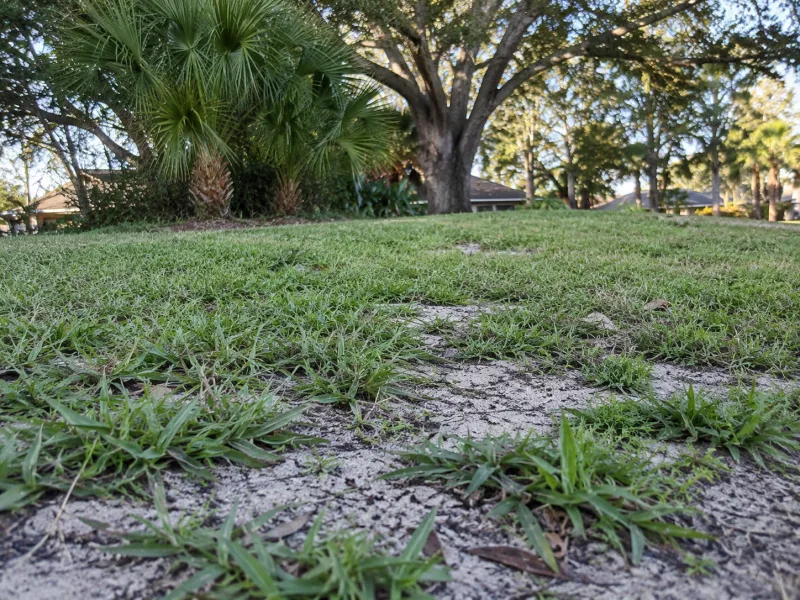
Patches of dry grass can develop when fast-draining sandy soils meet Florida heat and seasonal rainfall patterns. Haines City sits on the Lake Wales Ridge, where the University of Florida’s IFAS extension service (UF/IFAS) places field capacity near 10 percent by volume and the permanent wilting point near 3 percent. In plain terms, the sand holds only about a tenth of its volume in water after draining, and plants cannot draw out the last three percent. Your lawn is left with a very small usable reserve.
Water Sources and Zoning by What Is Planted
The water source serving your property determines what equipment is needed to keep solids from reaching small openings and moving parts. Reclaimed water irrigation uses treated utility water, while lake-fed irrigation draws surface water through a screened pump intake. Screen and disc filtration keep those solids out of drip tubing, micro-spray emitters and valve seals.
Iron in Central Florida well water can leave stains wherever sprinklers reach driveways, pavers, stucco or fences. When the spray meets the air, the iron oxidizes and creates rust staining that does not wash off. If your property uses a well, we manage the iron with filtration or a treatment injected ahead of the zones that keeps it dissolved so it cannot stain. We also place heads to keep rust-bearing runoff and overspray away from hard surfaces and walls.
St. Augustine turf, bahia, ornamental beds and young trees do not all need the same watering schedule when they share a property. Separate turf and planting zones keep each area on an appropriate valve. Dedicated turf zones also prevent your grass from sharing a schedule with beds and trees.
Free Quote FormWhat Sprinkler System Installation Costs in Central Florida
When you are comparing prices, the residential sprinkler system cost for yards of roughly 5,000 to 10,000 square feet runs about $3,500 to $6,000, based on Central Florida market rates as of late 2025. For yards under 5,000 square feet, the in ground sprinkler system cost generally ranges from $2,500 to $4,500, while yards above 10,000 square feet reach $6,000 to $10,000 or more. The zone count is the biggest single price driver, although adding a zone within the same installation costs comparatively little because the point of connection, controller and most trenching are already paid for.
- Zones, heads and nozzles. The size and layout of your yard determine how many zones, heads and nozzles it needs. Zone count follows the available flow, and every zone requires a valve. Rotors can cover open turf with fewer heads, while narrow beds and divided lawn areas require more spray bodies and nozzles.
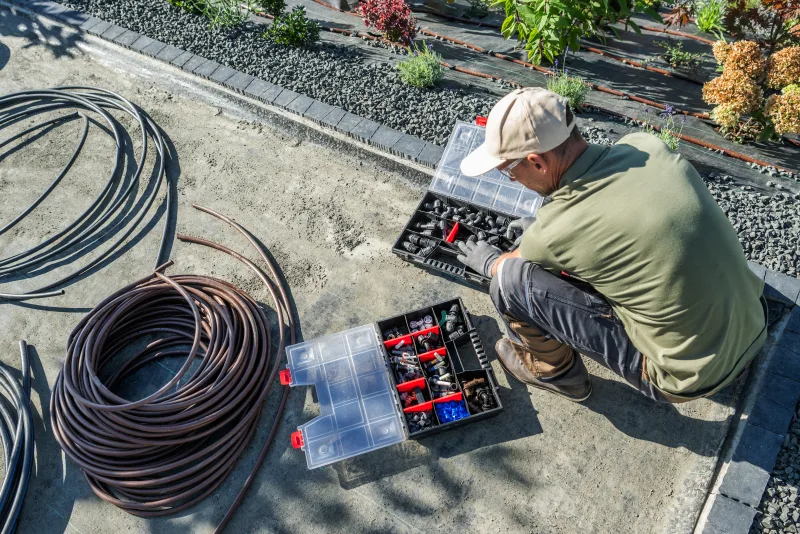
- Pipe and trenching. Longer pipe runs and obstacles between the water source and planting areas can increase the work involved. We price the linear feet of mainline and lateral pipe, the trenching route and any directional boring needed under paving, including drives and walks.
- Valves and controls. Your irrigation system cost also covers the valve manifold, wiring, weather-based controller and the system's shutoff sensor.
- Water source and compliance. If your property uses municipal water, the connection is usually the simplest arrangement. Because irrigation water goes onto the lawn rather than into the sewer, many utilities can bill a separate irrigation meter for water only and leave that volume off the sewer charge. Before installation, ask your water utility whether that option is available and what the meter fee is, since both vary by utility. Lake and well systems add a pump and filtration for open sources, often along with electrical work. A backflow assembly and permitting also affect the price where the scope requires them.
- Property conditions. Access, paving and underground improvements can all affect the amount of work required, so the estimate accounts for them. Installing the system before landscaping reduces restoration work.
New Irrigation System Installation Process
Knowing what will happen on your property and how long the work may take makes a new sprinkler system installation easier to plan. Haines City Irrigation Solutions explains the installation process from the first walkthrough through final handover. Our crew completes most residential installations in a small number of working days, depending on the property, permitting and site conditions.
-
Property Evaluation
Your system needs to account for everything already growing, built or buried on the property. During the on-site evaluation, we walk the site and note planting beds, paving, slopes, mature landscaping and underground features.
-
Water-Source Assessment
The available water supply determines how the system can operate, so we first identify whether the source is municipal, reclaimed, lake-fed or from a private well. We then measure the pressure at the point of connection, both while the water is at rest and while it is flowing, by taking static and dynamic pressure readings.
-
System Design and Zoning
You can review and approve the proposed head layout before any digging begins. Your irrigation system design also includes a zone layout plan that accounts for the measured supply and existing planting.
-
Written Estimate, Permitting and Scheduling
You receive a free estimate in writing once you approve the plan. The applicable permitting authority determines whether a permit is required based on the scope of the work and whether the address is inside Haines City or elsewhere in Polk County. A required permit means we handle the application and inspections before scheduling the start.
-
Trenching and Piping
We request a utility locate to identify marked underground services before excavation starts on your property. Our crew then installs the mainline and lateral buried irrigation piping, uses directional boring under paving where site conditions allow, and replaces lifted turf.
-
Valves, Heads and Controller Setup
To keep the valve manifold accessible after installation, we set it in boxes once the buried piping is in place. We install the heads to their planned arcs and complete the controller installation, including controller wiring and either a rainfall sensor or a soil-moisture sensor.
-
Testing, Adjustment and Walkthrough
We complete the testing and adjustment before handover by running each zone with you and correcting the arcs while the system is under pressure. To measure how evenly the water reaches the area, a catch-can distribution uniformity test records the applied depth across the watered area, so each zone's run time is set from measured numbers rather than estimates. We explain the controller and provide an as-built zone map. You also receive a written starting schedule based on the soil, planting and watering rules in force, including the different starting pattern needed for new sod.
What Florida Law Requires of a New Sprinkler System
Rain Shutoff, Backflow and Permits
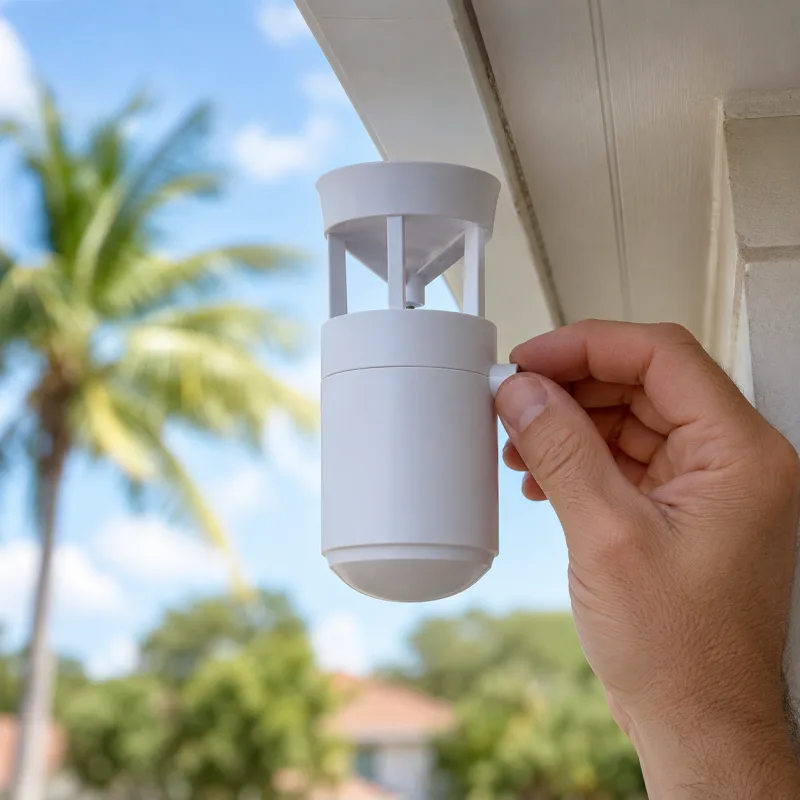
If you are installing an automatic irrigation system, it must stop watering when enough moisture is already present. Florida Statute 373.62 requires functioning technology that interrupts watering under those conditions, although it does not prescribe one sensor type. The same statute requires a licensed contractor working on an existing automatic system to test the rain-shutoff device and repair or replace it when necessary. Following UF/IFAS guidance, we use a rain sensor or soil moisture sensor and place it away from soffits and other cover so it can read the actual conditions.
Your water utility determines which backflow prevention devices it accepts and which third-party tester certifications it recognizes. We install the backflow prevention assembly to meet those requirements. Florida has no state tester license; someone holding certification the utility accepts tests the assembly and files the result. Permit requirements vary by project scope and jurisdiction; when required, we take care of the paperwork and inspections. If your project includes a new irrigation well, the applicable water management district and county health department permit that well separately from the sprinkler system.
Watering Rules: Where to Check, and Why We Do Not Print Them
The watering schedule for your address can change when drought conditions lead to a new water-shortage order. For that reason, we do not print a fixed schedule; check the current water conservation rules issued for your address.
The watering rules for your property depend on the water management district and utility that govern your address. Most of our Polk County service area falls under the Southwest Florida Water Management District (SWFWMD), while properties toward Osceola can have a different water management district and utility. Where SWFWMD and the City of Haines City govern, check the Southwest Florida Water Management District watering restrictions () and the City of Haines City water restrictions page (). Elsewhere, check the rules from the applicable district and utility. Using a private well or lake does not exempt your property from those rules. Reclaimed water remains under voluntary district guidance unless a local government or utility imposes a restriction. We program your controller to the rules in force and update it when the order changes.
Programming a New Sprinkler System Through the Wet and Dry Seasons
As Haines City moves between the dry season and the summer wet season, your lawn’s watering needs change with the weather. The installed sprinkler system remains the same, but its program adjusts so the watering schedule continues to match those changing conditions.
Why the Amount Stays the Same and the Frequency Changes
Your lawn still needs the right amount of water during each irrigation event, even when the season changes how often the system should run. UF/IFAS recommends applying 0.5 to 0.75 inches per event while changing the frequency by season. Because sandy soil drains quickly, applying more water at once does not create a deeper reserve for the roots. During the summer wet season, the rain-shutoff device skips irrigation that rainfall has already covered. When the dry season returns, the lawn needs the same application depth more often.
How a Weather-Based Controller Handles Seasonal Change
If you want the watering schedule to respond as conditions change, a weather-based controller can adjust how often each zone operates without requiring you to rebuild the program. A soil-moisture sensor or rain-shutoff device cancels a cycle when the landscape already has enough water. On an older controller, seasonal adjustment changes the base program by a set percentage and provides a rougher seasonal correction. At handover, we also show you how to override a smart controller for new sod, a repaired zone or time away, because useful automation depends on correct setup.
About Haines City and the Communities We Serve
The setting around your Haines City property may be an established citrus-era lot or a new community shaped by growth from the Interstate 4 corridor. Haines City sits six miles south of Interstate 4 on the Lake Wales Ridge, a gently rolling stretch of the Central Florida Highlands that reaches 157 feet in elevation here. Local landmarks include Lake Eva Park, the historic Polk Hotel and Haines City City Hall, while Ridge Community High School and Posner Park are north in Davenport.
Haines City’s humid subtropical weather brings a summer wet season followed by a long dry season, so irrigation supports both established landscapes and new construction across the area. We work with new subdivisions on ridge sand, older lots with mature planting, and lakefront properties on open water. As citrus acreage gives way to subdivisions within the Lakeland-Winter Haven metro area, residential systems share the landscape with golf, resort and commercial-scale irrigation toward Davenport and ChampionsGate.
Haines City Neighborhoods We Serve
- Southern Dunes
- Balmoral Estates
- Calabay Parc at Tower Lake
- Villa Sorrento
- Hammock Reserve
- Magnolia Park
- Bradbury Creek
- Lawson Dunes
- Tarpon Bay
- Patterson Groves
- Highland Meadows
- The Ridge at Highland Meadows
- Oakland
- Sand Oak
- Dorado Heights
- Oak Meadows
Areas We Serve Across Polk and Osceola Counties
For properties outside Haines City, Haines City Irrigation Solutions also serves communities across Polk County and into Osceola County, including the Four Corners and ChampionsGate resort corridor.
- Davenport
- Lake Hamilton
- Dundee
- Lake Alfred
- Loughman
- Poinciana
- ChampionsGate
- Reunion
- Four Corners
- Polk City
- Cypress Gardens
- Eagle Lake
- Winter Haven
- Auburndale
- Lake Wales
- Bartow
Recent Irrigation Projects Across Polk County
Homeowners, HOA and property-manager representatives, and builders call us with different irrigation needs. The projects we complete reflect the range of properties and systems we handle across the area.
-
New ridge-lot install, Haines City
On a new build set on ridge sand, the sloping front lawn had a dry high side and a damp low corner. We arranged the zones around the property’s elevation and planting, putting those areas on separate valves instead of making them share one schedule.
-
Lake-fed system, Lake Hamilton
Drawing irrigation water from open water changes how a lakefront system must be set up. We positioned the screened intake so it would remain usable at the seasonal low-water mark, while keeping the pump and screens accessible for cleaning.
-
HOA common areas, ChampionsGate
A board responsible for common areas needed a defined repair scope it could approve. We performed a catch-can audit and documented the failed heads and leaking valves, and reported coverage as measured distribution uniformity percentages rather than leaving the scope open-ended.
-
New construction, Davenport
Before the planned driveway and walkway crossings were paved, we routed the sleeves and mainline underneath them. We also coordinated the head placement around the grading and sod installation.
-
Repair and controller upgrade, Winter Haven
A failed valve and damaged heads kept an existing system from working as it should. We replaced those components and swapped the outdated clock-based controller for a weather-based unit with a rain-shutoff sensor, while the serviceable piping and valves stayed in place.
Sprinkler System Installation Questions We Are Asked Most
How Much Does a Sprinkler System Cost to Install in Haines City?
When you are budgeting for a new system, the sprinkler system installation cost depends first on the number of zones. Water source, trenching distance and pump needs also affect the cost.
Do I Need a Permit to Install a Sprinkler System in My Yard?
Your address and the size of the job determine whether a permit is needed. Requirements can differ depending on whether your property is within Haines City or unincorporated Polk County. When approval is necessary, we handle the application and required inspections.
Is Watering for 20 Minutes Enough?
The amount of water delivered in twenty minutes depends on the type of sprinkler head and nozzle serving that zone. A fixed spray zone applies roughly an inch and a half per hour, while a gear-driven rotor applies roughly half an inch to an inch per hour. Reaching the low end of the UF/IFAS 0.5 to 0.75 inch range takes approximately fifteen to twenty-five minutes for sprays and thirty to sixty minutes for rotors. Because these times vary by nozzle, set out straight-sided cans to measure your specific zone.
Are You Licensed and Insured?
You should be able to confirm who is handling your irrigation system before work begins. Haines City Irrigation Solutions is licensed and insured for irrigation work, with 15 years of experience in Polk County. Proof of insurance is available for you to review before work begins.
How Long Does a Sprinkler System Last?
If parts of your system begin failing before the buried piping does, that difference in service life is normal. Buried PVC usually lasts twenty years or more, while sprinkler heads usually last roughly five to ten years and valves ten to fifteen years. The rubber diaphragm inside a valve is the usual failure point. A controller is normally replaced when the manufacturer stops supporting it (apps, parts, sensor compatibility) rather than when it breaks. On lake-fed and reclaimed systems, neglected filtration shortens nozzle life first.
How Many Sprinkler Heads Can You Run Off One Zone?
The number of heads one zone can support depends on available flow, because every nozzle has a rated flow. We measure pressure and flow at the point of connection before drawing the layout, then size each zone within the supply capacity.
We Are Laying New Sod. Should the System Be Set Up Differently at First?
New sod needs different irrigation settings at first because it lacks roots that can reach deeper moisture. When you are preparing for sod installation, we provide establishment settings that differ from those used for mature turf. Your written starting schedule also explains the transition that helps prevent shallow rooting.
Have another question? Call (863) 900-8243 or use our online form.
Get a Free Estimate for Your Lawn Sprinkler System
Schedule a free on-site evaluation for your new sprinkler system by calling (863) 900-8243 or using the quote form. Haines City Irrigation Solutions will assess your property, explain the appropriate scope and provide a written estimate for work in Haines City and nearby communities throughout Polk County.